Skip to content



If you’ve ever wondered why some hyaluronic acid serums feel instantly plumping while others promise “deep” hydration, you’re not alone. In New Zealand’s changeable climate, from Auckland’s humid summers to crisp South Island winters, understanding how hyaluronic acid (HA) actually works can make all the difference to your glow.
What “hyaluronic acid molecular weight” really means
Hyaluronic acid comes in various sizes. Size affects how HA acts on your skin. Large molecules stay on the surface and give instant bounce. Smaller fragments settle into upper skin layers and hold water there.
In New Zealand’s climate a mix of sizes works best. In humid Auckland a light, surface-plumping HA feels ideal. In dry southern winds you need longer hydration and a rich moisturiser on top.
- High molecular weight HA (over 1000 kDa) forms a breathable film on your skin. It attracts water and cuts transepidermal water loss. You feel a springy lift.
- Mid molecular weight HA (300–50 kDa) settles in the upper epidermis. It keeps you comfortable all day.
- Very low molecular weight HA (under 20 kDa) reaches deeper outer layers. It can irritate reactive skin.
- Sodium hyaluronate and hydrolysed HA are common small HA forms. They boost moisture in upper layers without sinking to the dermis.
Mistake: Picking a serum by percent alone. A 2 percent label gives no data on molecule sizes. Look for formulas listing a blend of HA sizes or naming sodium hyaluronate plus film formers for consistent results.
Pro tip: If your skin is sensitive or redness-prone, favour mid and high molecular weight HA. Skip serums heavy in ultra-low fragments.
Penetration vs. plumping: what actually reaches your skin
HA pulls water into outer skin layers. Surface hydration and barrier support cause plump. Deep dermal change does not occur with typical serums.
Only tiny HA fragments or advanced systems move further. Even then the aim remains hydration in your epidermis.
Your technique and local weather matter a lot.
Quick answers to common questions
- Does HA reach the dermis? No. You get surface hydration and barrier support. That still shifts how skin feels.
- Is sodium hyaluronate better? It is a smaller HA form that hydrates upper layers well. Many serums use a mix for balanced effects.
- Auckland vs Central Otago? In humid Auckland layer lightly. In dry inland air seal with a richer cream or oil to avoid tightness.
Mistake: Applying HA on dry skin. In windy Wellington or with indoor heating HA can pull moisture out if you skip a water layer. Start with a mist or damp towel, then apply HA, then seal.
Pro tip: At a Ponsonby workshop guests who found HA sticky found it absorbed after a mist and a 60-second wait before moisturiser. Order and timing change absorption.
How ManukaRx uses HA (and mānuka oil) for results you can feel
Any HA serum holds water in place. Pair HA with barrier-support ingredients to stop moisture loss. East Cape mānuka oil soothes and balances your skin.
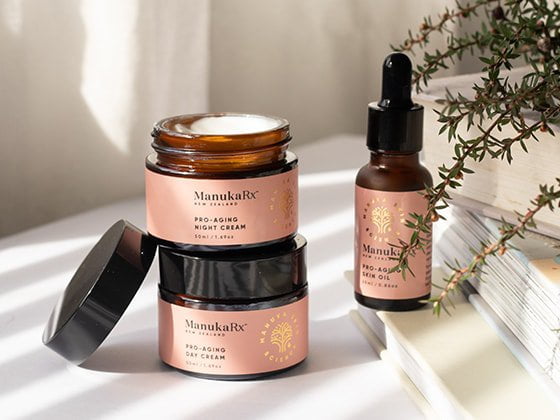
ManukaRx blends HA with East Cape mānuka oil in several products. For a short routine choose one hydrating step, then seal with a cream or oil. Adjust textures for your weather.
Consider these options:
- Firming Serum
- Hydrating Mist Toner
- Firming Day Cream
- Nourishing Night Cream
- Restorative Skin Oil
- East Cape Mānuka Oil [100% Pure]
If you aim for brightening add vitamin C. Try Skin Brightening Vitamin C Serum.
A simple Auckland/NZ routine: layer HA the right way
In New Zealand’s variable weather a light-to-rich approach makes HA work harder. Start with water-based steps then lock in moisture with emollients to face wind, salt air, or indoor heat.
- 1) Cleanse with a gentle, non-stripping cleanser. Try Gentle Oil Cleanser or Extra Gentle Cleansing Soap.
- 2) Mist to add a water layer. Use Hydrating Mist Toner.
- 3) Treat with HA serum. Apply one or two pumps on damp skin. If you use vitamin C in the morning, apply it first, then HA.
- 4) Seal with oil or cream. Try Restorative Skin Oil.
- 5) Moisturise for your climate. Day: Firming Day Cream. Night: Nourishing Night Cream.
- 6) SPF each morning. Apply sunscreen even on cloudy days.
Seasonal tweaks
- Humid Auckland summer: skip oil or use a light layer. Focus on mist, HA, and a lightweight cream.
- Cooler south or alpine air: add oil and a richer night cream to offset dryness.
- Skin feeling sensitive: use mid or high molecular weight HA, avoid strong acids, patch test new items.
Pro tip: For eyes apply HA serum up to your orbital bone. Follow with a targeted eye cream if needed. Try Restorative Eye Cream.
FAQ
Is low molecular weight HA better?
Smaller fragments reach deeper outer layers but can irritate sensitive skin. Many in New Zealand prefer blends with mid and high molecular weights for both bounce and comfort.
What is best HA for hydration in NZ?
A mix of molecular weights suits our varied climate. High MW adds surface bounce and mid MW gives lasting comfort. Include barrier-support partners like oils or emollients to cut moisture loss.
Does HA serum penetration reach the dermis?
Most HA stays in outer layers. Even advanced systems focus on hydration and barrier support, not deep structural change.
Is sodium hyaluronate the same as hyaluronic acid?
Sodium hyaluronate is the salt form of HA. It has a smaller size and hydrates upper layers in serums with ease.
What percentage of HA is best?
No single percent fits all. Performance rests on molecular weight blend, full formula, and how you layer it more than on percent alone.
Can hyaluronic acid cause breakouts?
HA does not trigger purging. Breakouts link to actives like retinoids or comedogenic ingredients in your layers.
How often use HA serum?
Most skin types can apply HA day and night. If skin feels tight add a water layer first, then seal with an emollient.
Use HA in humid Auckland or drier regions?
Yes. In humid Auckland a light moisturiser works. In dry or alpine air add oil or a richer cream to lock in water.
Does HA draw moisture out in dry air?
HA pulls water from available sources. In dry air start with a mist or damp skin and seal with an emollient to keep water in place.
Your 2 minute HA hydration checklist
- Apply HA serum on damp skin or after a mist.
- Choose a blend of molecular weights for normal to dry skin. Pick mid and high MW if your skin feels irritated.
- Seal with an emollient cream or oil to stop tightness from wind or indoor heating.
- Adjust texture for your weather - lighter layers in humidity, richer layers in dry or cold air.
- Pair HA with vitamin C in the morning for bright skin. Use retinal or retinoids at night if your skin accepts them.
- Patch test new products and watch your skin responses.
If you want a ready routine try ManukaRx combos like Firming Serum, Hydrating Mist Toner, and Firming Day Cream. Or build a night plan with Restorative Skin Oil and Nourishing Night Cream.
General advice. If you have a diagnosed skin condition or ongoing irritation contact a dermatologist or GP in New Zealand for personal guidance.
Sources
- Papakonstantinou E, Roth M, Karakiulakis G. Hyaluronic acid: a key molecule in skin aging. Dermatoendocrinol. 2012;4(3):253-258.
- Brown MB, Jones SA. Hyaluronic acid: a unique topical vehicle for the localized delivery of drugs to the skin. J Eur Acad Dermatol Venereol. 2005;19(3):308-318.
- Termeer CC, et al. Size-dependent hyaluronan fragments induce an inflammatory response in human monocytes. J Exp Med. 2000;191(4):571-576.
- Campo GM, et al. Molecular size hyaluronan differently modulates toll-like receptor-4 in LPS-induced inflammation. Glycobiology. 2010;20(5):609-623.
Ready to build your HA routine for New Zealand conditions? Explore more at ManukaRx or start with customer favourites like Firming Serum and Hydrating Mist Toner.